
The problem
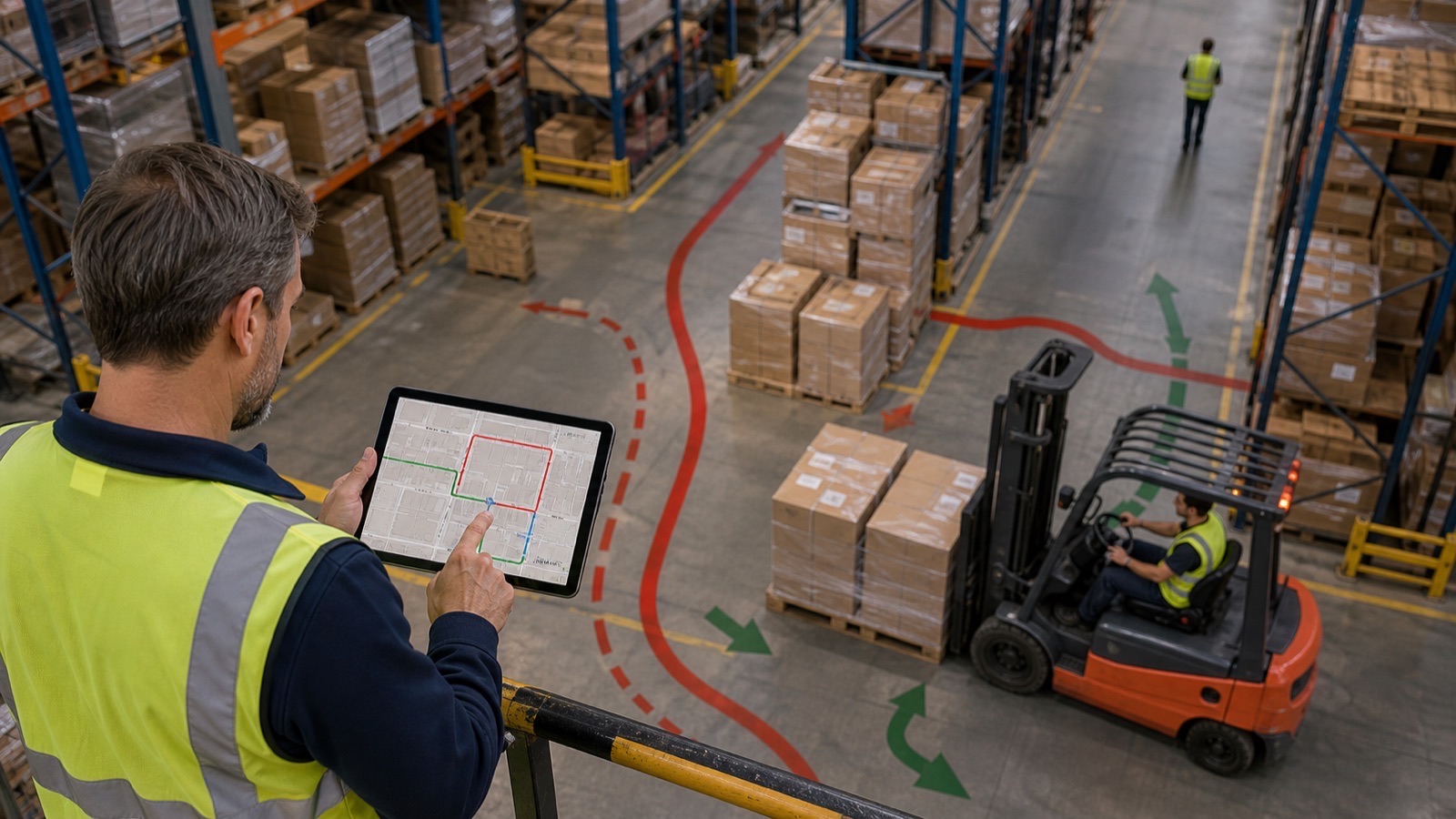
A forklift can be mechanically sound and still lose productivity every hour. Congested routes, blind corners, poor staging areas, tight aisles and shared pedestrian zones slow movement and increase risk. Operators compensate with workarounds, which can create damage, near misses and inconsistent throughput.
Route problems are often accepted as part of the day because everyone knows the workaround. Operators slow down at blind corners, wait for blocked aisles or take longer routes because the layout has become normal to them. For example, a packaging line may lose output because pallets have to cross a congested pedestrian route before reaching dispatch, forcing operators to queue, reverse and re-stage loads every hour.
Those small delays compound across every pallet movement. The site loses throughput without a single obvious breakdown, and the pressure can show up later as damage, near misses, overtime or missed dispatch windows.
How WRMH could help
WRMH can support a practical review of how trucks move through the site. We combine equipment advice with operator feedback, training needs and maintenance findings. Sometimes the answer is a different truck type; sometimes it is better staging, refresher training or a planned change to traffic management.
The management review should start by walk the route with the movement in mind. WRMH can help identify pinch points, blind corners, staging delays and shared pedestrian areas, then connect those findings to truck choice, training or layout changes.
The site gains a specific response and a way to test it, making the productivity decision easier to defend across operations, safety and finance.
Common mistakes
The wrong response is treating slow movement as an operator issue when layout, staging or truck choice may be the cause. This narrows the decision too early and can direct time or budget at the symptom rather than the operating mechanism behind it.
When to ask WRMH for help
Managers should consider WRMH input when forklift movement is slowing work even though the truck itself may be mechanically sound. The useful outcome is a productivity decision tied to the truck, task and evidence, with a clear owner for what changes next.
Further reading
Build your understanding of this topic
These related knowledge base articles give you more context, checks and practical language before you decide what to do next.