Forklift Basics
What type of forklift do I need for my site?
Start with the load, lift height, aisle width, surface, gradients, shift pattern and charging or fuel arrangements. Those details decide whether counterbalance, reach, pallet truck, sideloader or specialist equipment is the safest and most cost-effective route.
Read the full guide
Forklift Basics
What does forklift lift capacity really mean?
Capacity is not just the headline truck size. It depends on load centre, lift height, mast, attachments and stability limits, so the safe working capacity can be lower than managers expect once the real application is considered.
Read the full guide
Forklift Basics
What is forklift load centre?
Load centre is the distance from the fork face to the centre of the load. If the load is longer, uneven or handled with an attachment, the truck may need more capacity than the pallet weight alone suggests.
Read the full guide
Forklift Basics
What is the difference between counterbalance, reach and pallet trucks?
Counterbalance trucks are flexible for general lifting and loading, reach trucks suit racking and narrow warehouse aisles, and pallet trucks move pallets at low level. The right choice comes from matching the truck to the job, not the name on the quote.
Read the full guide
Forklift Basics
How do I know if a forklift is suitable for indoor or yard work?
Indoor and yard work place different demands on tyres, ground clearance, weather protection, turning space, visibility and power source. A truck that works well in a clean warehouse may struggle on rough surfacing or gradients outside.
Read the full guide
Forklift Basics
What should I check before choosing a forklift?
Check the load, lift, route, surface, operator competence, compliance duties, service support, warranty, parts availability and total cost. A good choice should make the operation easier to run, not just satisfy a purchase request.
Read the full guide
Buying & Sourcing Equipment
Should I buy, hire, lease or contract hire a forklift?
The right route depends on cashflow, expected hours, how long the need will last, maintenance appetite and replacement risk. Hire gives flexibility, purchase can protect long-term cost, and contract routes can bundle support into a clearer monthly commitment.
Read the full guide
Buying & Sourcing Equipment
When does a used forklift make commercial sense?
Used equipment often works well for low-to-medium hours, backup trucks, capital-sensitive purchases and sites that need proven capability without new-truck cost. The key is buying with inspection, warranty, service support and a realistic view of condition.
Read the full guide
Buying & Sourcing Equipment
How can I compare forklift quotes properly?
Compare specification, warranty, maintenance route, battery or charger details, attachments, delivery, training implications and aftercare. The lowest headline price is not always the best value if it creates downtime, repair risk or operational compromise.
Read the full guide
Buying & Sourcing Equipment
What should be included in a forklift quote?
A useful quote should make the truck specification, capacity, lift height, mast, tyres, power source, warranty, maintenance option, delivery, inspection status and support route clear enough for a manager to defend the decision.
Read the full guide
Buying & Sourcing Equipment
How does maintenance change the real cost of equipment?
Maintenance can turn an equipment decision from a one-off purchase into a managed uptime decision. Planned support, inspection records, parts availability and repair response all affect whole-life cost and confidence.
Read the full guide
Buying & Sourcing Equipment
How can I avoid over-specifying or under-specifying a forklift?
Use the real site application as the test: heaviest load, highest lift, tightest turn, busiest shift, worst surface and likely future need. Overspecification ties up capital, while underspecification increases damage, downtime and safety risk.
Read the full guide
Forklift Hire
When does short-term forklift hire make sense?
Short-term hire is useful for breakdown cover, peaks, stock builds, trials, site moves and temporary projects. It protects output when waiting for repair or replacement would slow the operation down.
Read the full guide
Forklift Hire
What information is needed for forklift hire?
The hire decision needs truck type, lift height, capacity, surface, route, operating hours, site location, fuel or charging access, delivery window and any attachments. Better information usually means faster, safer hire matching.
Read the full guide
Forklift Hire
How do I choose the right hire forklift?
Choose hire equipment by the job it must perform, not by the nearest available truck. Capacity, lift height, mast type, tyres, power source, site restrictions and operator training all need checking before delivery.
Read the full guide
Forklift Hire
Should I choose hire with maintenance or rent-only hire?
Hire with maintenance suits sites that want simpler cost control and less repair admin. Rent-only can work when a site wants flexibility and is comfortable managing repair decisions separately.
Read the full guide
Forklift Hire
When should a hired forklift be reviewed or returned?
Review hire when the job changes, hours increase, the truck is underused, costs drift or the original reason for hire has passed. Active hire should solve a defined operational need, not become invisible spend.
Read the full guide
Forklift Hire
Can hire cover help during LOLER repairs?
Yes. If a LOLER defect removes a truck from use, hire cover can protect production, dispatch or yard movement while repairs are planned. The replacement still needs to match the site duty and operator competence.
Read the full guide
Servicing & Repairs
What should I do when a forklift breaks down?
Stop using the truck if safety is uncertain, capture the symptoms, location, make, model, serial number and any warning codes, then route the issue quickly. Clear information helps an engineer prepare for a better first visit.
Read the full guide
Servicing & Repairs
What does an engineer need before attending a forklift fault?
Useful attendance information includes truck identity, fault symptoms, recent events, photos, operator notes, site access constraints and whether the truck can be moved safely. This reduces wasted time and improves first-time fix potential.
Read the full guide
Servicing & Repairs
Why does forklift fault diagnosis matter?
Diagnosis separates the symptom from the cause. Without it, sites can replace parts, lose hours and still face the same breakdown because the underlying issue was battery, hydraulic, controller, operator or application related.
Read the full guide
Servicing & Repairs
When should a faulty forklift be stopped?
A truck should be stopped when the fault affects brakes, steering, hydraulics, mast control, tyres, safety systems, stability or operator confidence. Continuing to use it can turn a repair issue into a safety and compliance issue.
Read the full guide
Servicing & Repairs
How does service history help repairs?
Service history shows patterns: repeat faults, missed maintenance, parts already fitted, inspection findings and usage pressure. That context helps managers decide whether to repair, review, hire cover or plan replacement.
Read the full guide
Servicing & Repairs
How can we reduce repeat forklift faults?
Repeat faults need more than another callout. Managers should look at application, operator habits, parts quality, maintenance intervals, charging, site conditions and whether the truck is being asked to do the wrong job.
Read the full guide
Parts & Spares
What information helps WRMH source the right forklift part?
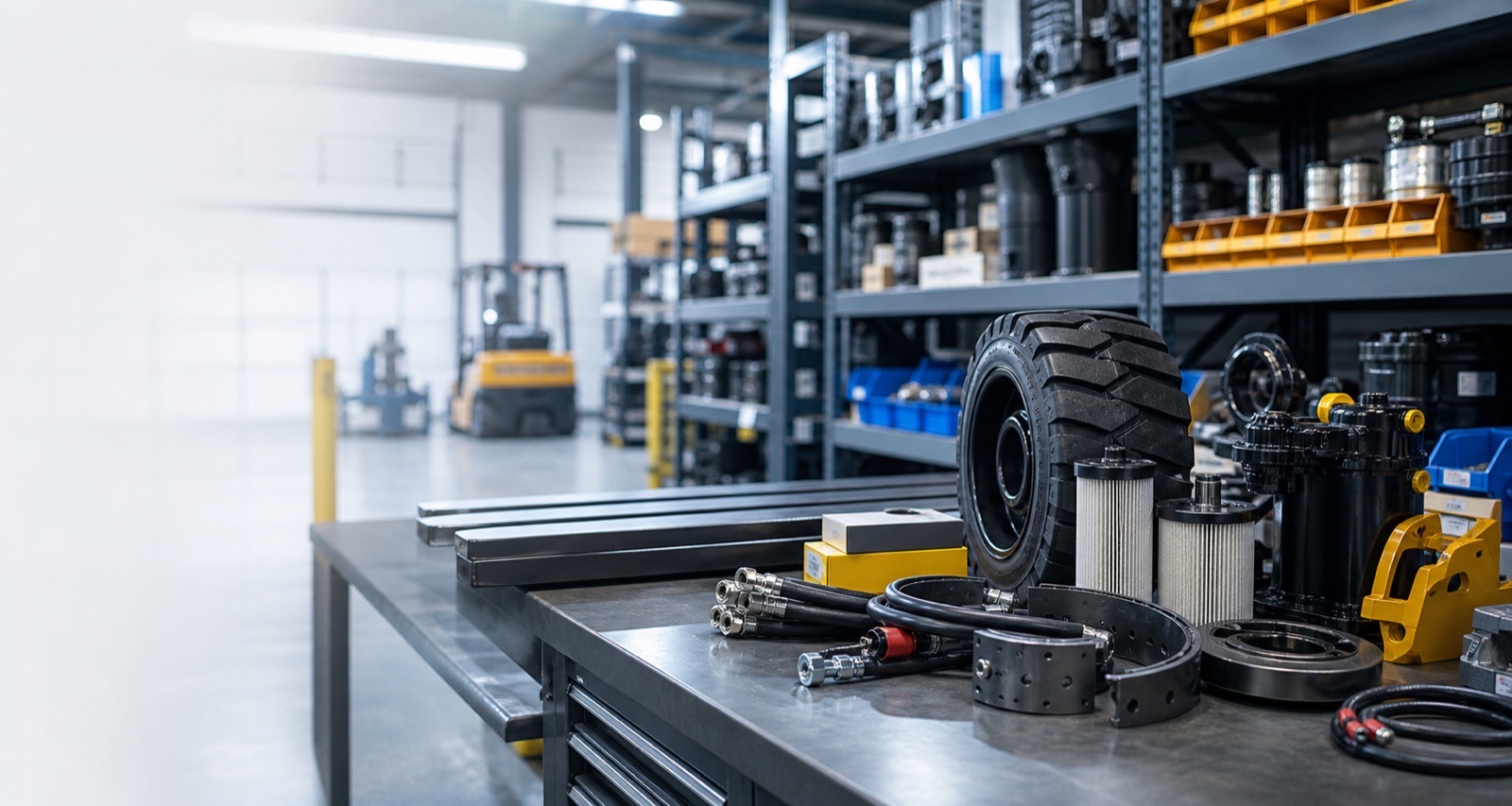
Make, model, serial number, part number, photos, symptoms and where the part fits all help identify the right item. Small model differences can change the correct part, especially on brakes, hydraulics, chains, rollers and controllers.
Read the full guide
Parts & Spares
Why do forklift serial numbers matter for parts?
Serial numbers identify the exact build and model variant. That matters because two similar trucks from the same manufacturer can use different parts depending on mast, year, drive system or factory specification.
Read the full guide
Parts & Spares
How can I avoid ordering the wrong forklift part?
Avoid ordering by description alone. Confirm the truck identity, photograph the old part and markings, check whether it is safety critical, and ask for expert identification where the variant is uncertain.
Read the full guide
Parts & Spares
When does express parts delivery matter?
Express delivery matters when a part controls uptime, safety, dispatch, production flow or customer service. The decision should balance speed, quality, warranty and whether the part can be fitted correctly once it arrives.
Read the full guide
Parts & Spares
What is the difference between OEM and aftermarket forklift parts?
OEM parts are supplied to manufacturer specification, while aftermarket parts can vary in quality and value. The best choice depends on the part, risk level, warranty, availability and how critical the truck is to the operation.
Read the full guide
Parts & Spares
When should engineers fit the part instead of the customer?
Engineer fitting is usually the better route for safety-critical, diagnostic, hydraulic, brake, steering, electrical or mast-related parts. It protects warranty, records and confidence that the truck is safe to return to work.
Read the full guide
LOLER & Compliance
What is a forklift LOLER inspection?
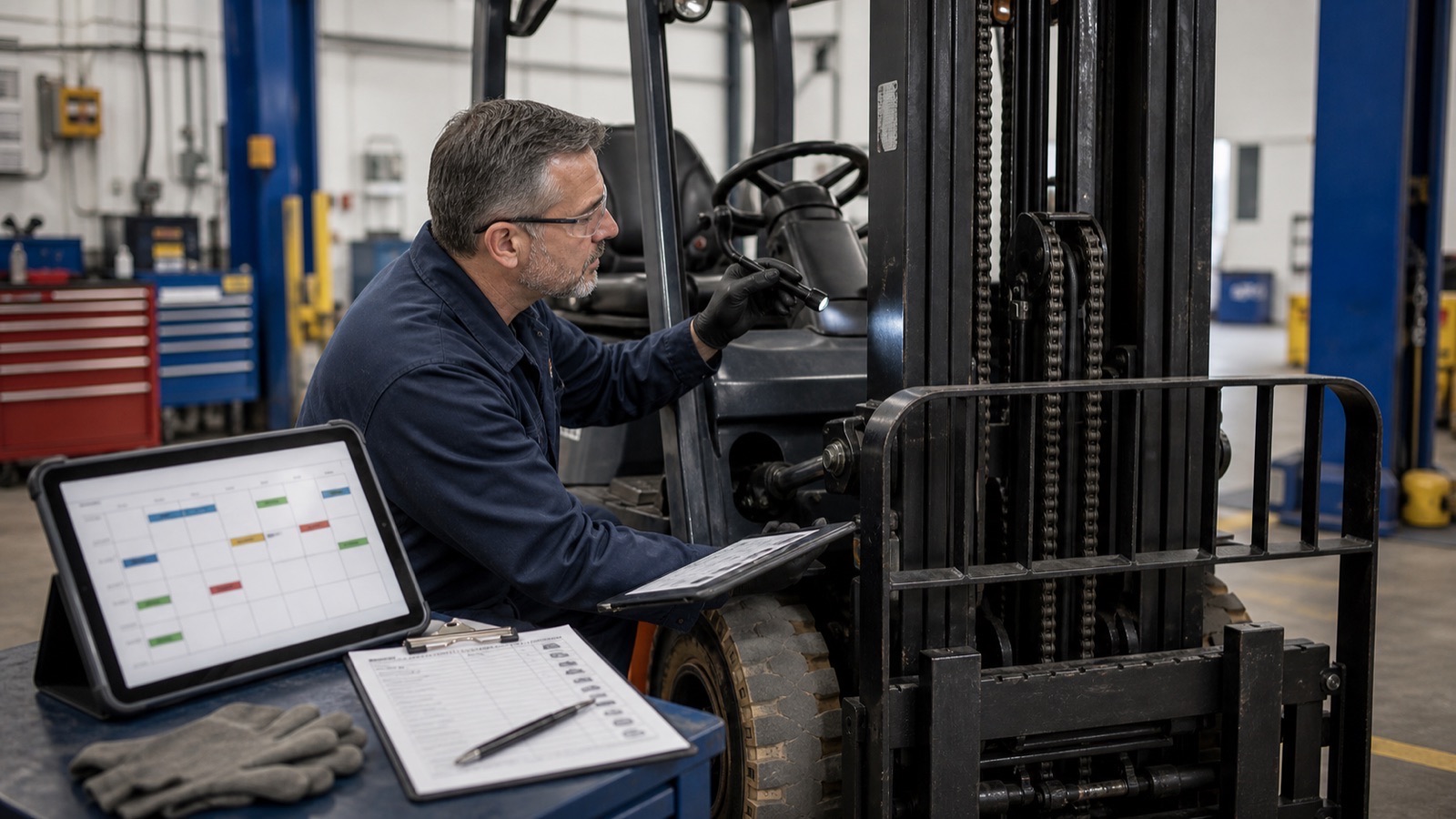
A LOLER thorough examination is an independent inspection of lifting equipment and safety-critical lifting components. It is not the same as servicing, and it helps managers evidence that lifting equipment remains fit for use.
Read the full guide
LOLER & Compliance
How often does a forklift need LOLER?
Many forklifts require thorough examination at least every 12 months, but frequency can be shorter depending on use, attachments, lifting people, environment and risk. Managers should follow the written scheme or competent advice.
Read the full guide
LOLER & Compliance
What is the difference between LOLER and servicing?
Servicing maintains the truck. LOLER examines lifting safety and records whether the equipment is fit for continued use. Both matter, but one cannot simply replace the other.
Read the full guide
LOLER & Compliance
What happens if defects are found on a LOLER report?
Defects must be understood, prioritised and controlled. Immediate defects can remove equipment from use, while timed defects need planned action before the deadline becomes a compliance and operational problem.
Read the full guide
LOLER & Compliance
What records should forklift managers keep?
Managers should keep LOLER reports, service history, defect actions, training records, pre-use check evidence, repair records and hire documentation. Good records make audits, insurance questions and operational decisions easier.
Read the full guide
LOLER & Compliance
How can missed LOLER inspections be avoided?
Use a visible compliance calendar, clear ownership, reminder dates and a route for repairs after inspection. Missed LOLER dates are usually a management visibility problem before they become a site disruption.
Read the full guide
Operator Training
What forklift training does an operator need?
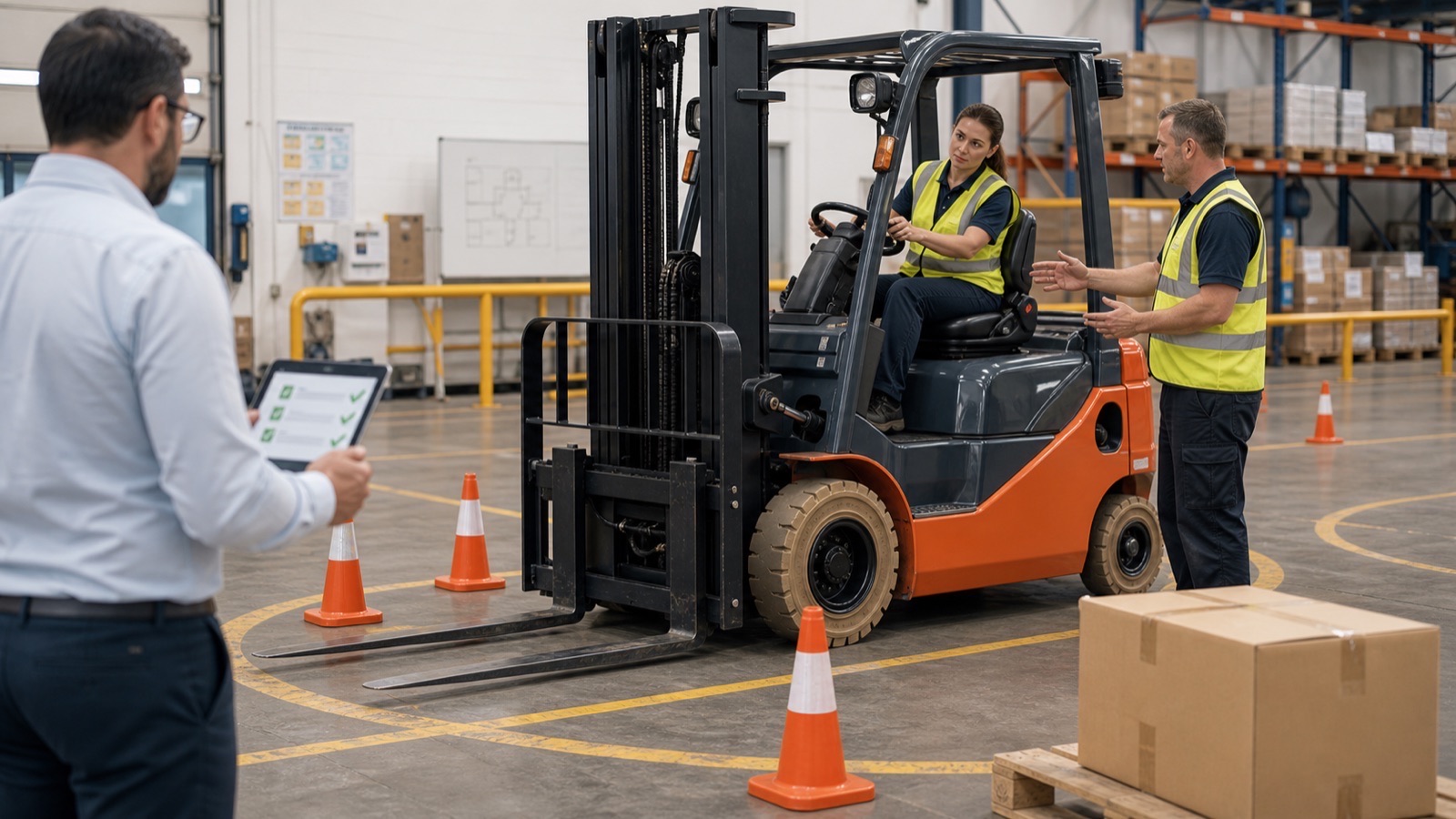
Operators need training matched to truck category, experience, site conditions and the work they perform. Novice, refresher, conversion and familiarisation each solve different competence and evidence needs.
Read the full guide
Operator Training
What is the difference between novice, refresher and conversion training?
Novice training builds competence from the start, refresher training updates existing operators, and conversion training moves a trained operator onto a different truck type. Choosing correctly protects time, cost and records.
Read the full guide
Operator Training
How do training records prove competence?
Training records show what the operator was trained on, when, by whom and when refreshers may be due. They help managers evidence competence and spot gaps before they become operational or audit issues.
Read the full guide
Operator Training
Why do forklift refresher dates matter?
Refresher dates help prevent competence from becoming assumed rather than evidenced. They also give managers a planned route to address bad habits, site changes, near misses and new equipment.
Read the full guide
Operator Training
How can training reduce forklift damage?
Good training improves observation, load handling, positioning, speed control, battery or truck care and confidence. That reduces impacts, tyre abuse, racking damage and avoidable repair spend.
Read the full guide
Operator Training
How should training be planned around shifts?
Training should be planned around production peaks, operator availability, cover, course type and expiry risk. A clear calendar prevents urgent bookings from disrupting the operation.
Read the full guide
Safety & Workplace Transport
How can mobile phones create hidden forklift risk?
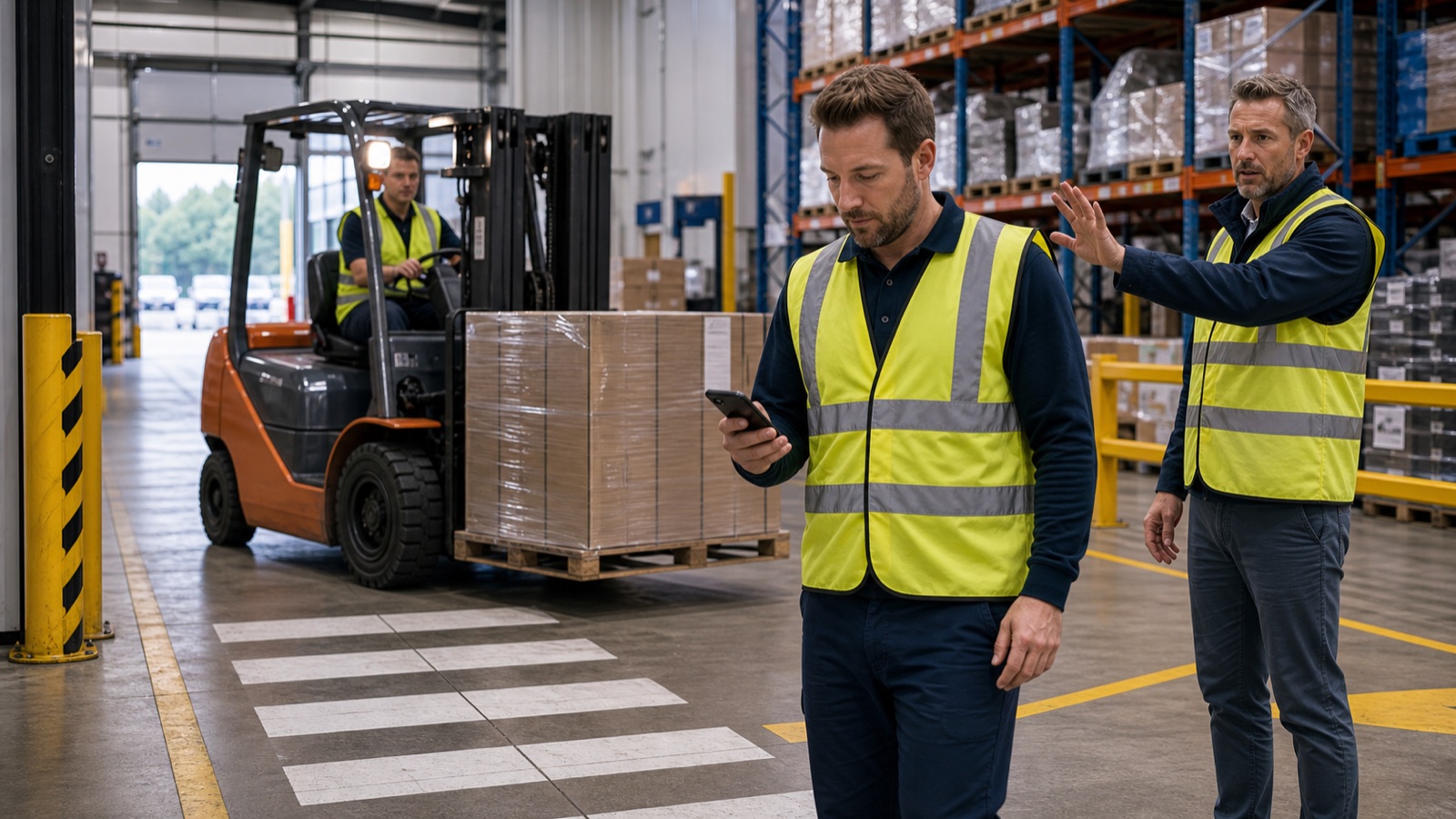
Phones can distract operators, pedestrians and supervisors at the exact point where attention matters. The risk is often hidden because no damage occurs until a near miss, route conflict or load movement exposes it.
Read the full guide
Safety & Workplace Transport
What does pedestrian segregation mean around forklifts?
Segregation means controlling how people and trucks share space through routes, barriers, crossings, rules, visibility and supervision. It works best when it reflects how the site really moves goods and people.
Read the full guide
Safety & Workplace Transport
Why do pre-use checks matter as a safety control?
Pre-use checks catch faults before a truck starts work. They also create a record of ownership, showing whether brakes, tyres, forks, hydraulics, lights and warning devices were checked before the shift began.
Read the full guide
Safety & Workplace Transport
How should forklift near misses be reviewed?
Near misses should be reviewed for route design, visibility, training, supervision, speed, load handling, layout and pressure. The aim is to remove the repeat condition, not just remind people to be careful.
Read the full guide
Safety & Workplace Transport
How do floor condition and housekeeping affect forklift safety?
Poor housekeeping creates slipping, tripping, collision, load stability and tyre damage risks. Debris, packaging, spillages and blocked routes can quickly turn normal pallet movement into uncontrolled risk.
Read the full guide
Safety & Workplace Transport
How can managers review workplace transport risk?
Managers should walk the routes, watch real movements, check records, speak to operators, review incidents and compare rules with actual behaviour. The useful question is where trucks, people, time pressure and poor visibility meet.
Read the full guide
Fleet Cost Control
How does downtime affect forklift fleet cost?
Downtime costs more than the repair invoice. It can delay loading, stop production, increase labour time, force emergency hire and affect customer service, especially when one truck supports a critical movement.
Read the full guide
Fleet Cost Control
How can utilisation reveal hidden forklift cost?
Utilisation shows whether trucks are overworked, underused or poorly matched to the operation. It helps managers see where hire, replacement, redeployment or maintenance decisions could release cost or protect uptime.
Read the full guide
Fleet Cost Control
How do tyres reveal hidden fleet cost?
Tyre wear can reveal floor issues, poor routes, turning habits, overloading, outdoor abuse or the wrong tyre choice. Treating tyres as a cost signal helps managers fix causes, not just replace rubber.
Read the full guide
Fleet Cost Control
How does operator training protect forklift budgets?
Training protects budgets by reducing impact damage, tyre wear, battery abuse, unsafe handling and avoidable breakdown pressure. Better operators usually give managers fewer surprise repair decisions.
Read the full guide
Fleet Cost Control
How can hire review dates reduce fleet spend?
Review dates stop temporary hire becoming permanent background cost. They prompt managers to ask whether the truck is still needed, whether the specification is right and whether purchase or contract options now make more sense.
Read the full guide
Fleet Cost Control
What is a forklift cost review?
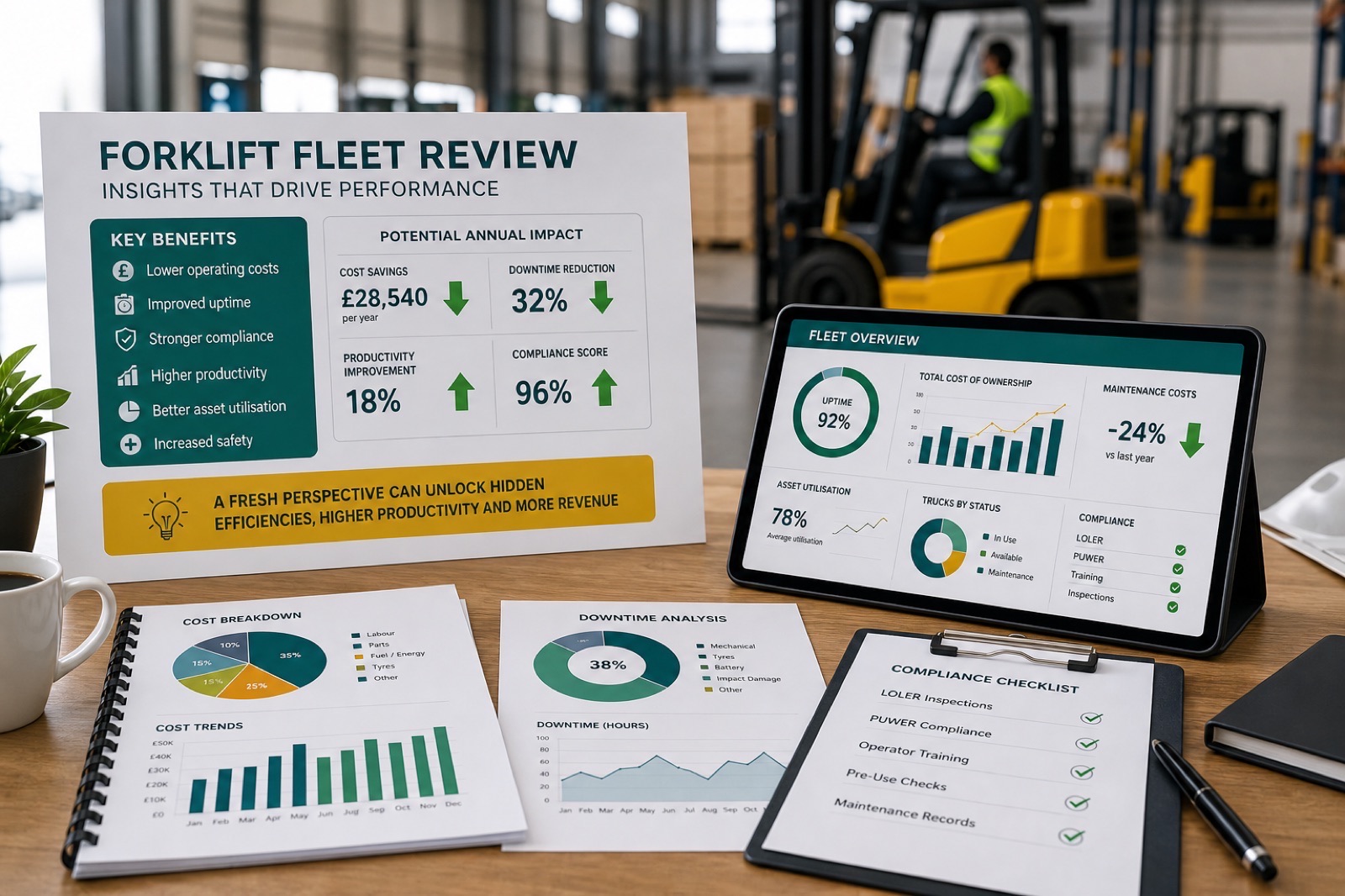
A forklift cost review compares utilisation, downtime, hire, repair history, tyre spend, training records, LOLER status, replacement timing and site pressure. It gives managers a clearer route to reduce waste without weakening the operation.
Read the full guide
Sector Guides
How does forklift support differ for food and beverage sites?
Food and beverage sites often need clean, audit-aware, time-sensitive support around production, ingredients, packaging, dispatch, BRC pressure and hygiene-sensitive areas. Uptime matters, but so does evidence and supply chain confidence.
Read the full guide
Sector Guides
What forklift issues affect logistics operations most?
Logistics operations are exposed to dispatch deadlines, loading bay pressure, multi-shift use, yard movements, tyre wear, hire peaks and operator availability. Support needs to protect flow as much as individual trucks.
Read the full guide
Sector Guides
How should engineering sites approach forklift support?
Engineering sites often handle heavier, awkward or high-value loads, so capacity, stability, attachments, service records and operator competence matter. The support route should reflect the risk of damaged product and stopped production.
Read the full guide
Sector Guides
What matters for forklift support in packaging and printing?
Packaging and printing sites need careful movement of reels, pallets, printed stock and production materials. The right trucks, attachments, tyres, training and repair response help reduce waste, delays and avoidable handling damage.
Read the full guide
Sector Guides
How can forklift support help local authorities and depots?
Local authorities and depots often run mixed equipment across stores, waste, parks, facilities and seasonal work. Practical support helps manage compliance, uptime, hire cover and records without adding unnecessary admin.
Read the full guide
Sector Guides
What forklift support is needed for ports and outdoor yards?
Ports and yards need equipment suited to weather, surfaces, heavy loads, visibility, traffic flow and urgent repair pressure. Truck choice, tyres, maintenance and hire cover all affect operational resilience.
Read the full guide