
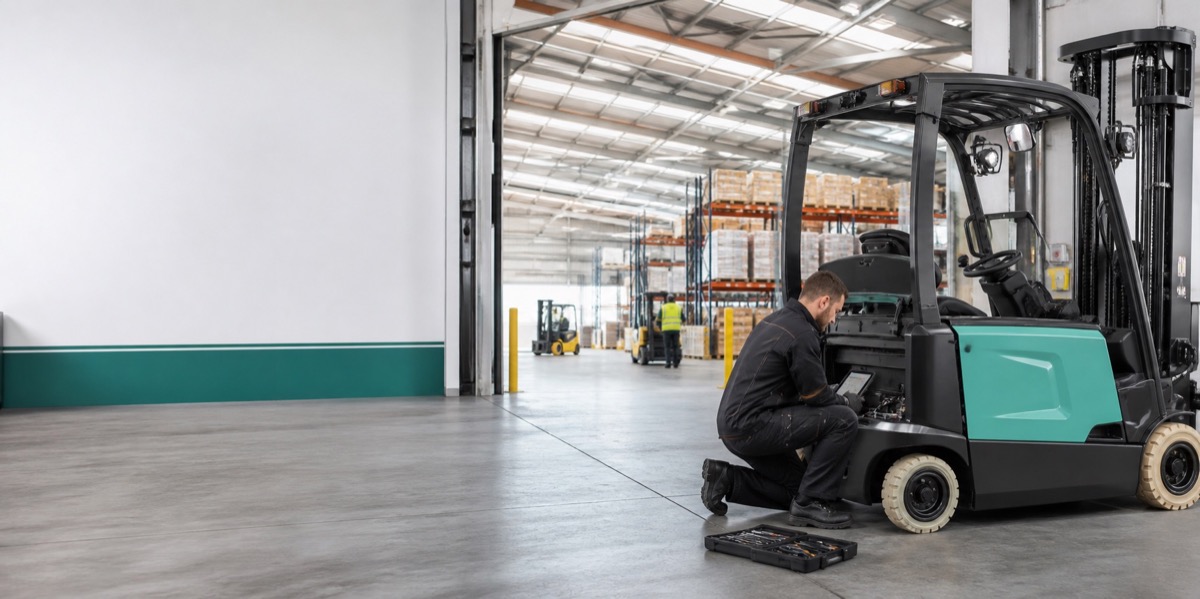
Understanding forklift service intervals matters because it can change availability, safety, cost or compliance in a real forklift operation. This guide explains the practical point a manager needs before a fault is treated as a one-off repair while the cause continues to damage uptime, confidence and engineer response time.
Short answer
Forklift service intervals means moving from a symptom to a reliable repair decision without guesswork, repeat visits or avoidable downtime. For forklift service intervals, the servicing question is whether the symptom leads to a reliable repair or a pattern likely to return. For forklift service intervals, use engineer access during the working shift and repair cost against remaining equipment life as decision tests, supported by evidence such as warnings reported verbally but absent from records.
What this means in practice
Forklift service intervals improves when the site captures symptoms, when the fault happens, warning codes, recent service history and what the operator noticed before the engineer attends. For forklift service intervals, the servicing question is whether the symptom leads to a reliable repair or a pattern likely to return. For forklift service intervals, managers should use site evidence rather than habit or assumption. Reviewing forklift service intervals, at the shift handover where a recurring symptom is reported, ask the team to separate the truck symptom from the route, load and operator conditions and put a cost or delay against the event before ranking the response. For forklift service intervals, managers need to know which option the evidence supports and which risk remains if no change is made. Do not close the forklift service intervals review without considering the symptom disappearing during an unloaded test.
Poor information about forklift service intervals can turn a straightforward repair into extra attendance time, parts delay, hire cost and loss of confidence. The decision on forklift service intervals is whether the truck can continue, needs controlled monitoring or requires a repair, competence, inspection or equipment response.
Key checks
- On the question of forklift service intervals, record the exact symptom, warning light, noise, leak or performance change. Connect the finding to operator observations captured without interpretation.
- Before acting on forklift service intervals, note when the fault appears: cold start, under load, after charging or during lifting. Record its effect on symptoms under load rather than only at rest.
- During a check of forklift service intervals at the shift handover where a recurring symptom is reported, check service history and recent defect reports. Use safe isolation while diagnosis is incomplete to judge its importance.
- For forklift service intervals, create a defensible record by decide whether the truck should be stopped until inspected. Show whether it changes engineer access during the working shift.
- The named owner of forklift service intervals should consider hire cover if the truck is critical to dispatch or production. Connect the finding to repair cost against remaining equipment life.
Common mistakes
For forklift service intervals, avoid solving only what is easiest to see. For forklift service intervals, engineer access during the working shift may change the explanation, while parts availability changing the return-to-service date provides the evidence needed to verify the result.
What good looks like
For forklift service intervals, a well-managed position is evident at the shift handover where a recurring symptom is reported: there is a control for engineer access during the working shift, a record addressing oil, debris or heat showing the cause location and an agreed action threshold.
When to ask WRMH for help
For forklift service intervals, external help is sensible where the shift handover where a recurring symptom is reported produces conflicting evidence or repeated symptoms. WRMH can review repair cost against remaining equipment life alongside service intervals exceeded during high-hour work and connect the finding to the most appropriate practical capability.