
Understanding forklift brakes matters because it can change availability, safety, cost or compliance in a real forklift operation. This guide explains the practical point a manager needs before the wrong part is ordered, delivery is delayed or a self-fit repair creates another fault because the component was not identified properly.
Short answer
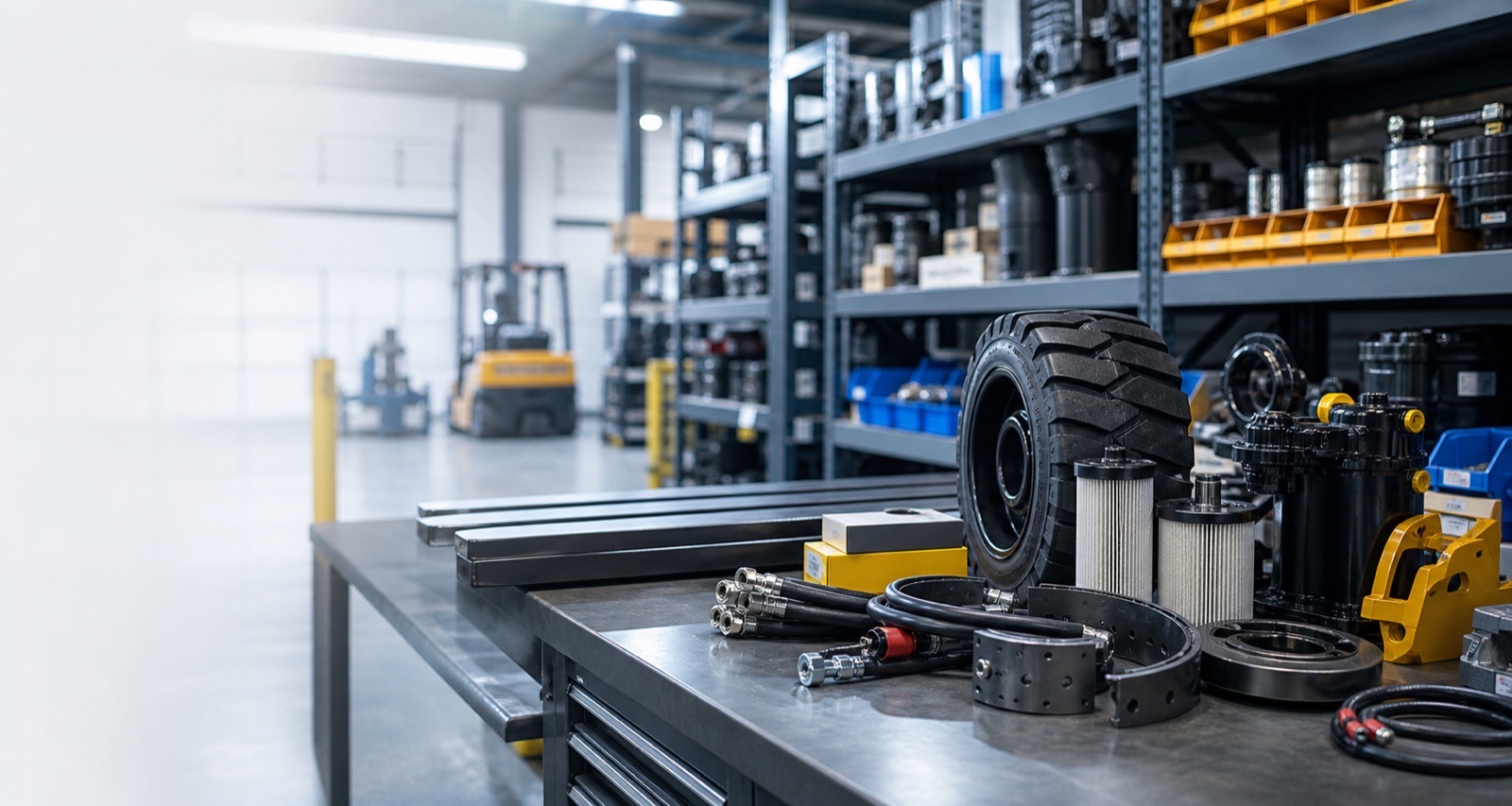
Forklift brakes are the stopping and holding system that lets the truck control load movement safely. Brake parts may include shoes, pads, discs, drums, cables, cylinders, seals and fluid components depending on the truck. For forklift brakes, the parts question covers identification, quality, availability and the correct fitting route. For forklift brakes, the answer becomes operational when it is connected to associated components affected by the same failure, stockholding justified by failure frequency and an observable sign such as engineer bookings made before delivery is confirmed.
What this means in practice
Brake condition affects stopping distance, pedal feel, hill holding, confidence in tight areas and whether operators can control a loaded truck around pedestrians, racking or loading bays. For forklift brakes, the parts question covers identification, quality, availability and the correct fitting route. Managers reviewing forklift brakes should be able to point to the observation, action and risk reduced. Reviewing forklift brakes, the clearest evidence on forklift brakes may appear at the decision to self-fit or book an engineer. For forklift brakes, first observe the task during a normal busy period rather than an empty-site trial; then check whether another truck doing the same task shows the same pattern. The answer on forklift brakes should change a named management decision, rather than end as background information. Include serial numbers copied from the wrong truck in the comparison.
Weak brakes create immediate safety risk and can force the truck out of service. They can also mask related problems such as contamination, adjustment issues, worn drums or operator habits that need attention. With forklift brakes, the practical choice is to accept and monitor the condition, intervene now, or change the support or equipment route.
Key checks
- For forklift brakes, record the symptom: long pedal travel, pulling to one side, noise, smell, warning light or poor hill hold. Show whether it changes quality level and warranty for the intended duty.
- Before forklift brakes consumes time or budget, check whether oil, water or dust has contaminated the braking area. Connect the finding to safety criticality of the failed component.
- Using the decision to self-fit or book an engineer to test forklift brakes, confirm the truck model and brake type before ordering parts. Record its effect on parts lead time against the repair plan.
- To make forklift brakes site-specific, treat braking issues as safety critical until inspected. Use component markings and photographs in position to judge its importance.
- For forklift brakes, the person approving the next step should review whether repeated brake work suggests route, load or operator behaviour issues. Show whether it changes serial-number accuracy before the order is placed.
Common mistakes
For forklift brakes, treating the issue as an isolated event can hide the influence of associated components affected by the same failure. Omitting evidence connected with photographs missing connectors or mounting points also prevents a reliable before-and-after comparison.
What good looks like
For forklift brakes, the target state is a shared rule at the decision to self-fit or book an engineer, supported by evidence about associated components affected by the same failure, a named owner and records addressing associated seals, fixings or bearings omitted.
When to ask WRMH for help
For forklift brakes, involve WRMH when evidence from the decision to self-fit or book an engineer remains inconclusive, the sign returns or stockholding justified by failure frequency changes the decision. For forklift brakes, share the truck identity, task conditions, previous action and evidence connected with warranty evidence lost during self-fitting. For forklift brakes, that information helps WRMH target the relevant capability.