
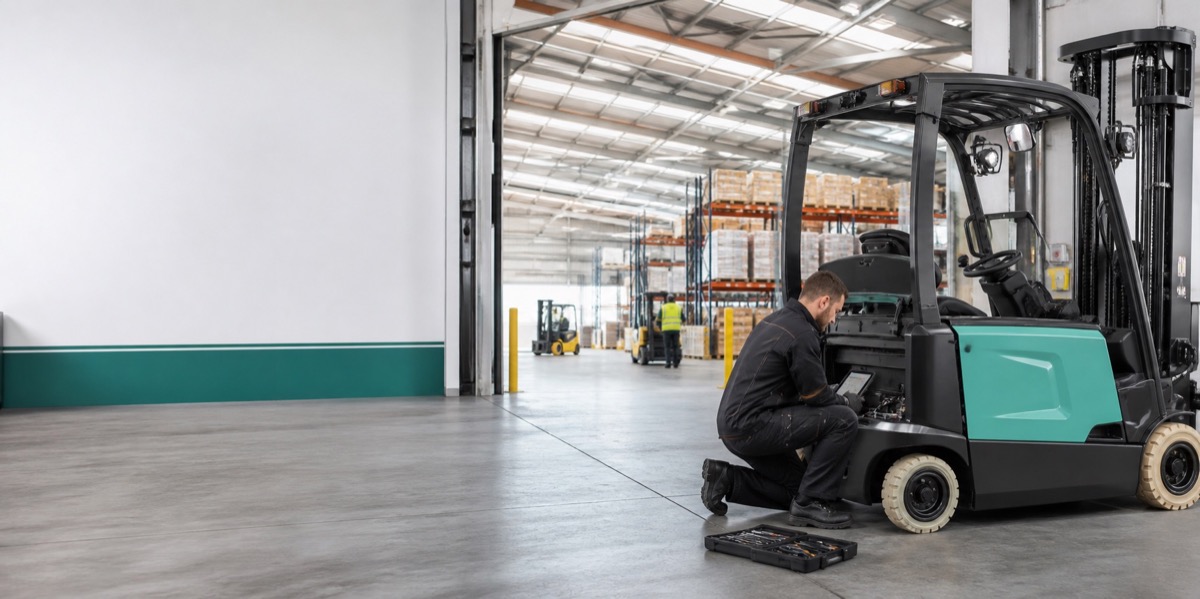
Understanding what to do when a forklift breaks down matters because it can change availability, safety, cost or compliance in a real forklift operation. This guide explains the practical point a manager needs before a fault is treated as a one-off repair while the cause continues to damage uptime, confidence and engineer response time.
Short answer
The response when a forklift breaks down means moving from a symptom to a reliable repair decision without guesswork, repeat visits or avoidable downtime. For the response when a forklift breaks down, the servicing question is whether the symptom leads to a reliable repair or a pattern likely to return. For the response when a forklift breaks down, the site-specific answer sits in hire cover for the movement the truck supports, maintenance evidence from the previous quarter and records showing the symptom disappearing during an unloaded test.
What this means in practice
The response when a forklift breaks down improves when the site captures symptoms, when the fault happens, warning codes, recent service history and what the operator noticed before the engineer attends. For the response when a forklift breaks down, the servicing question is whether the symptom leads to a reliable repair or a pattern likely to return. A stronger decision on the response when a forklift breaks down connects the technical point to the movement, record or cost it changes. Reviewing the response when a forklift breaks down, the operational check for the response when a forklift breaks down belongs at the defect report before an engineer is booked, where the site can record the decision, owner and review date beside the original evidence before it separate the truck symptom from the route, load and operator conditions. Managers should be able to recognise the response when a forklift breaks down on their own site and separate it from a similar issue. Look for warnings reported verbally but absent from records as a confirming sign.
Poor information about the response when a forklift breaks down can turn a straightforward repair into extra attendance time, parts delay, hire cost and loss of confidence. The next step for the response when a forklift breaks down may be to stop, observe, repair, train, inspect, hire or replace; site facts should decide which route is proportionate.
Key checks
- On the question of the response when a forklift breaks down, record the exact symptom, warning light, noise, leak or performance change. Use parts availability before the repair slot to judge its importance.
- Before changing the response when a forklift breaks down arrangements, note when the fault appears: cold start, under load, after charging or during lifting. Record its effect on engineer access during the working shift.
- During a check of the response when a forklift breaks down at the defect report before an engineer is booked, check service history and recent defect reports. Connect the finding to repeat faults against the same asset number.
- To answer “What to do when a forklift breaks down” with evidence, decide whether the truck should be stopped until inspected. Show whether it changes symptoms under load rather than only at rest.
- The named owner of the response when a forklift breaks down should consider hire cover if the truck is critical to dispatch or production. Use maintenance evidence from the previous quarter to judge its importance.
Common mistakes
For the response when a forklift breaks down, do not make the call on the response when a forklift breaks down from appearance alone. Ignoring hire cover for the movement the truck supports or failing to capture parts availability changing the return-to-service date removes the evidence needed for comparison.
What good looks like
For the response when a forklift breaks down, the issue is controlled when the site can demonstrate what happens at the defect report before an engineer is booked, who owns hire cover for the movement the truck supports, how repeat callouts against the same asset number is recorded and when intervention is required.
When to ask WRMH for help
For the response when a forklift breaks down, external help is sensible where the defect report before an engineer is booked produces conflicting evidence or repeated symptoms. WRMH can review maintenance evidence from the previous quarter alongside repaired functions not tested in the original task and connect the finding to the most appropriate practical capability.
Deeper WRMH view
A longer read is useful here because the response when a forklift breaks down can affect more than one part of the operation. Managers may start with one symptom, but the answer often sits across truck suitability, operator behaviour, records, parts, servicing, hire cover or replacement planning.
The most useful approach is to connect the subject to the site reality. That means asking where the truck works, who uses it, what load it carries, what records exist and what happens to the operation if the issue is not controlled.
What managers should look for
Look for evidence that changes the decision, not just evidence that confirms there is a problem. Repair history, defect notes, operator comments, inspection reports, usage hours, hire records and damage patterns can all point to a better next step.
- On the question of the response when a forklift breaks down, record the exact symptom, warning light, noise, leak or performance change. Use parts availability before the repair slot to judge its importance.
- Before changing the response when a forklift breaks down arrangements, note when the fault appears: cold start, under load, after charging or during lifting. Record its effect on engineer access during the working shift.
- During a check of the response when a forklift breaks down at the defect report before an engineer is booked, check service history and recent defect reports. Connect the finding to repeat faults against the same asset number.
- To answer “What to do when a forklift breaks down” with evidence, decide whether the truck should be stopped until inspected. Show whether it changes symptoms under load rather than only at rest.
- The named owner of the response when a forklift breaks down should consider hire cover if the truck is critical to dispatch or production. Use maintenance evidence from the previous quarter to judge its importance.
Why the decision matters commercially
Forklift issues often create cost indirectly. A truck that is wrong for the route slows people down. A training gap creates damage. A missed inspection creates uncertainty. A poor parts decision delays a first-time fix. A weak sourcing route can tie up capital without improving uptime.
The stronger decision is the one that gives managers more control: clear equipment suitability, clear records, clear operator competence and a practical route if the truck is unavailable.
Practical next step
If the response when a forklift breaks down is starting to affect a live operation, ask WRMH to help turn the issue into a practical action. Share the truck details, site conditions, usage pattern and the business impact, and WRMH can help decide whether the next step should be repair, hire, parts, training, LOLER planning, equipment advice or a wider fleet review.