
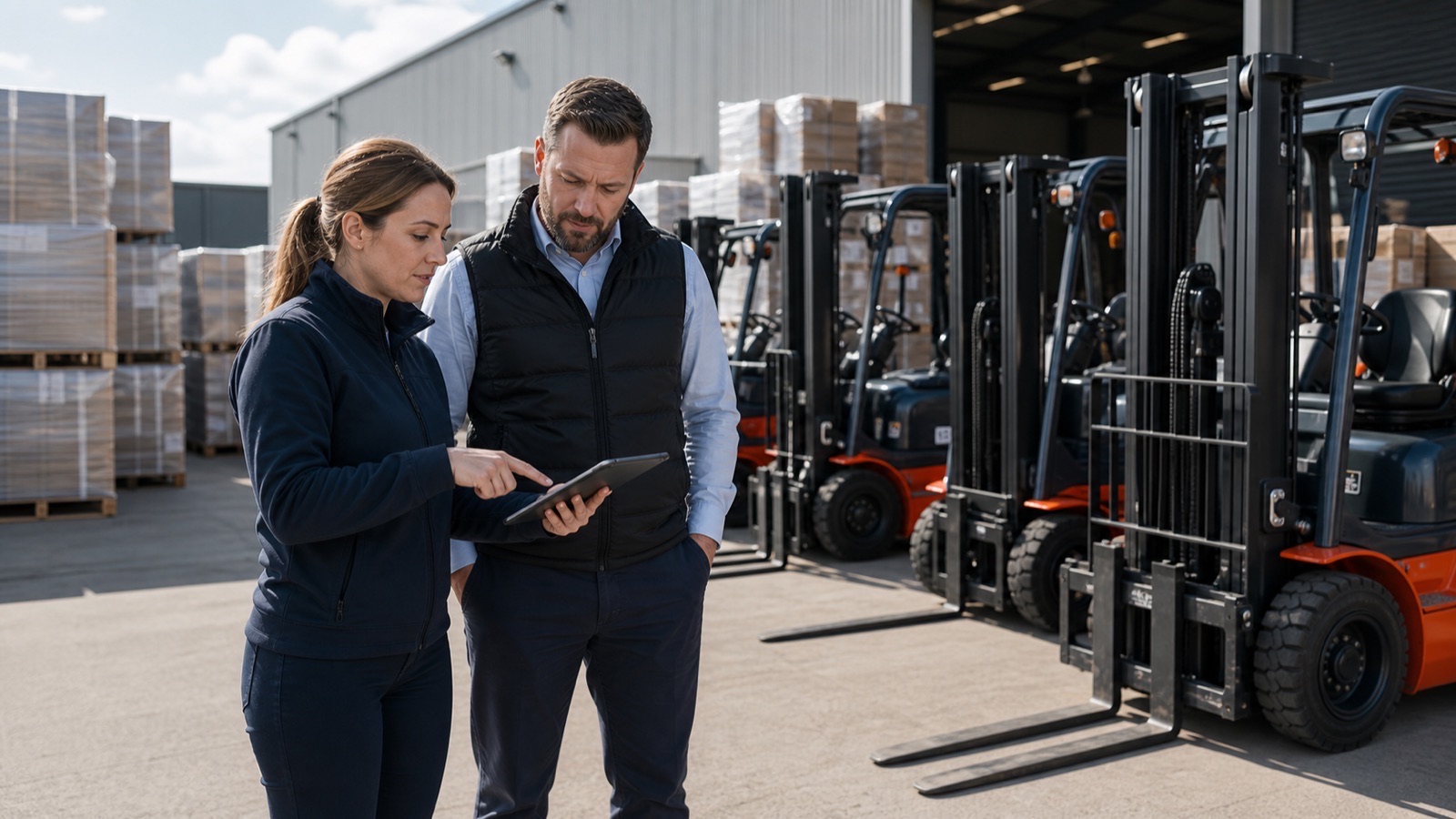
Understanding counterbalance hire matters because it can change availability, safety, cost or compliance in a real forklift operation. This guide explains the practical point a manager needs before temporary capacity becomes expensive, unsuitable or difficult to return because the hire specification was not clear enough at the start.
Short answer
Counterbalance hire is a forklift or materials-handling truck type designed for a particular movement pattern, load shape, surface and operator task. For counterbalance hire, the hire question is whether temporary capacity fits the load, site and term. For counterbalance hire, a manager can move beyond theory by checking return condition recorded by both parties, truck suitability for the stated load and route and whether collection delayed after the need has ended is present.
What this means in practice
Counterbalance hire matters because the right truck type improves flow, while the wrong one forces slow manoeuvres, extra handling, poor visibility or unnecessary operator strain. For counterbalance hire, the hire question is whether temporary capacity fits the load, site and term. Keep counterbalance hire practical by stating what is affected, how urgent it is and what happens next. Reviewing counterbalance hire, the clearest evidence on counterbalance hire may appear at the peak-period plan where temporary capacity is allocated. For counterbalance hire, first check whether another truck doing the same task shows the same pattern; then compare the latest observation with the previous three records. The answer on counterbalance hire should change a named management decision, rather than end as background information. Include operators untrained for the delivered category in the comparison.
A poor decision on counterbalance hire can reduce productivity, increase damage, create training gaps and make the site pay for capability it does not use. With counterbalance hire, the practical choice is to accept and monitor the condition, intervene now, or change the support or equipment route.
Key checks
- For counterbalance hire, define the load, travel distance, lift height and working surface. Record its effect on availability during the exact peak window.
- Before counterbalance hire consumes time or budget, check aisle width, doorway height, yard conditions and charging or fuel needs. Connect the finding to weekly cost against the original end date.
- Using the peak-period plan where temporary capacity is allocated to test counterbalance hire, confirm operators are trained for the truck category. Show whether it changes charger or fuel arrangements throughout the term.
- To make counterbalance hire site-specific, review whether attachments, long loads or pedestrian areas change the choice. Use return condition recorded by both parties to judge its importance.
- For counterbalance hire, the person approving the next step should compare hire, used and new options against the expected hours. Record its effect on operator competence for the supplied category.
Common mistakes
For counterbalance hire, a weak decision would treat one symptom as proof while overlooking return condition recorded by both parties. Without evidence about lift height below the highest required position, the site cannot tell whether the same mechanism has returned.
What good looks like
For counterbalance hire, a defensible target state combines consistent behaviour at the peak-period plan where temporary capacity is allocated, evidence of return condition recorded by both parties, ownership of damage noted without a signed handover record and a documented review threshold.
When to ask WRMH for help
For counterbalance hire, bring WRMH in if the site has recorded cover unavailable during the stated peak but still cannot settle the action. Truck identity, task detail and truck suitability for the stated load and route allow a more accurate and commercially controlled response.