
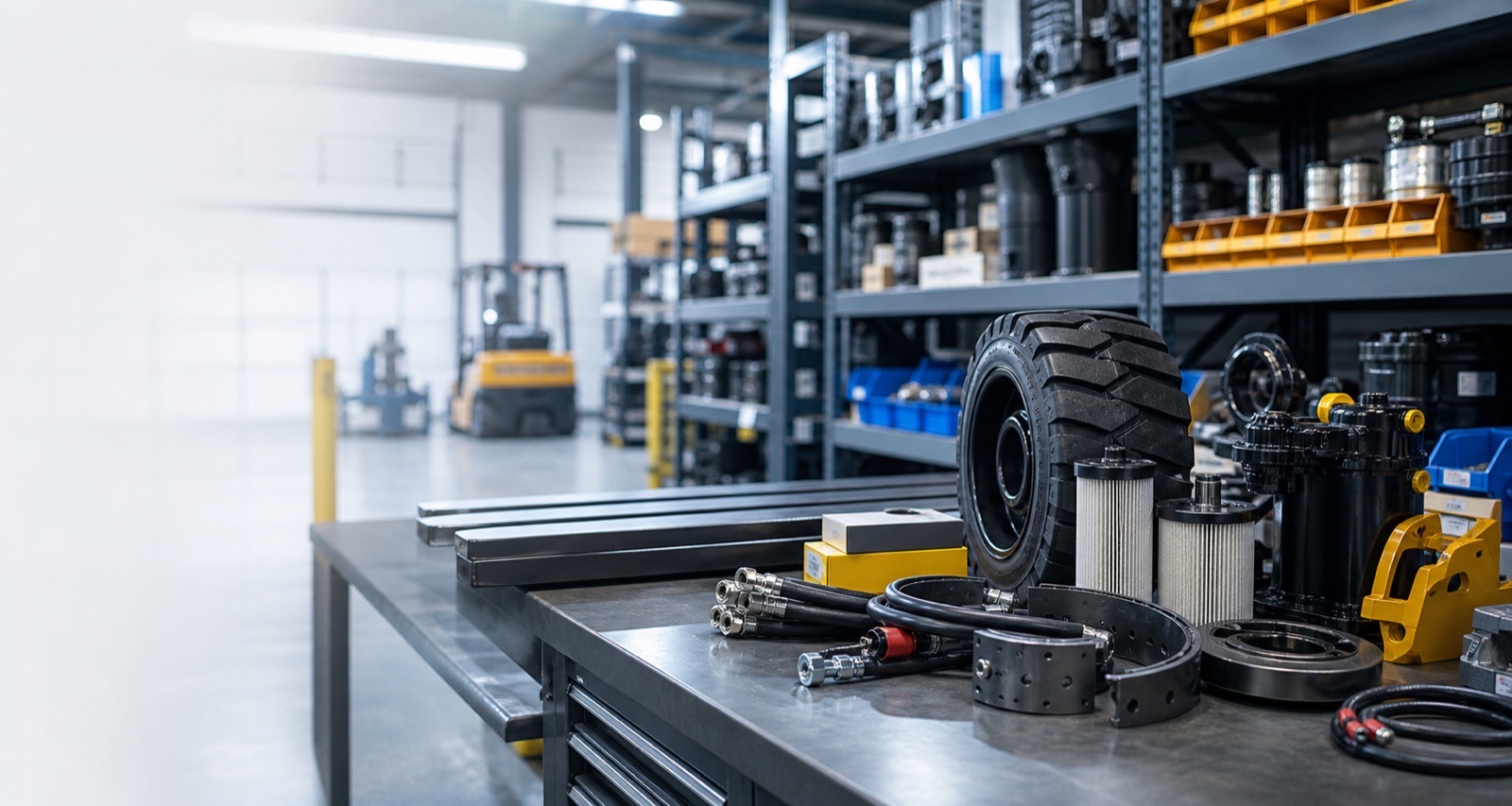
When several parts are needed at once, the order matters. A manager may be looking at cost, lead time and availability, but the priority should start with what the part controls and what could happen if it fails during normal work.
Short answer
Safety-critical forklift parts should be prioritised where they affect stopping, steering, lifting, stability, operator protection, warning systems, visibility or legal inspection evidence. These parts deserve faster identification, clearer fitting control and stronger return-to-work checks than cosmetic or comfort items.
What this means in practice
If a truck needs a seat cushion, a warning beacon and brake components, the brake issue has a different risk profile. If a fork, chain or hydraulic hose is involved, the truck's ability to handle a load safely may be affected. The site should not let a general purchasing queue hide those differences.
The manager decision is how to allocate urgency. Safety-critical parts may justify express sourcing, engineer fitting, hire cover or stopping the truck, while lower-risk parts can follow a normal supply route without weakening operational control.
Key checks
- Separate safety-critical parts from comfort, trim and non-essential items.
- Check whether the issue came from a pre-use check, service visit or LOLER report.
- Decide whether the truck should be stopped until the part is fitted.
- Confirm the fitting route and return-to-work evidence before ordering.
- Escalate parts that affect people, load control or legal records.
Common mistakes
A common mistake is prioritising by purchase value rather than risk. A low-cost safety component can matter more than an expensive non-critical item if it changes braking, visibility or load control.
What good looks like
Good control means the site can explain which parts affect safe use, what action was taken, who fitted them and what check confirmed the truck could return to work.
When to ask WRMH for help
Ask WRMH for help when multiple parts are competing for attention and you need to know which ones affect safe operation first. WRMH can identify the risk, source suitable parts and advise whether engineer fitting or hire cover is the safer operational route.
ask WRMH to help rank the parts list by operational risk before approving spend.
Manager decision and evidence
Prioritise safety-critical forklift parts should be tested at busy times, not only in written procedures. For prioritise safety-critical forklift parts, crossings, blind aisles, loading bays, phone use, route discipline and pre-use reporting show whether controls work. For prioritise safety-critical forklift parts, the parts question covers identification, quality, availability and the correct fitting route. For prioritise safety-critical forklift parts, managers should use site evidence rather than habit or assumption. Reviewing prioritise safety-critical forklift parts, use the serial-number check against the component removed from the truck as the practical test point: record the decision, owner and review date beside the original evidence, then photograph the condition and record when it appears. Treat prioritise safety-critical forklift parts as a controlled sequence rather than an informal task passed between departments. Check the result against component orders returned after incomplete identification.
Weak control of prioritise safety-critical forklift parts can lead to collisions, damaged racking, unstable loads, poor reporting, injury risk and reliance on luck. Evidence about prioritise safety-critical forklift parts should determine whether the action is operational control, technical repair, operator development, temporary cover or planned replacement. The manager should record who owns the action, what evidence will confirm it has worked and when the decision will be reviewed.
For prioritise safety-critical forklift parts, this extra discipline keeps a useful article from ending as general guidance. It gives operations, maintenance and safety teams one shared basis for deciding what changes now and what evidence should be retained.