
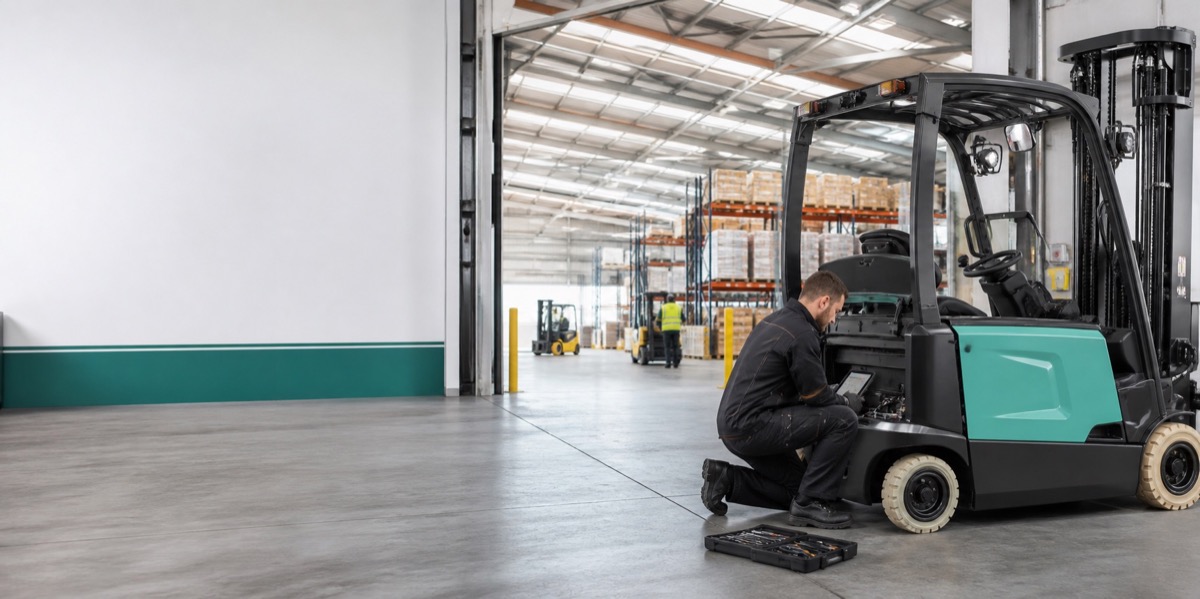
Parts availability can turn a repair decision into an operational planning decision. If the correct part is available quickly, waiting for repair may be sensible. If supply is uncertain, managers may need to consider hire cover, temporary process changes or a wider replacement review.
Short answer
Managers should use parts availability to decide how long the operation can wait, what work the truck protects, whether hire cover is justified and whether the fault changes the longer-term view of the asset. Availability is not only a purchasing issue; it shapes uptime planning.
What this means in practice
A stopped counterbalance waiting for a same-day brake part is a different problem from a specialist truck waiting a week for a controller. The first may be a controlled repair. The second may affect dispatch, production flow or safety-critical movement enough to justify hire cover or a replacement conversation.
The manager decision is whether waiting protects cost or creates a bigger loss. That decision should be based on the truck role, delivery expectation, safety position and the consequence of the asset being unavailable.
Key checks
- Confirm whether the exact part has been identified and is available.
- Ask for realistic delivery timing, not just estimated availability.
- Calculate what work stops while the truck is waiting.
- Compare hire cover cost with downtime, overtime and service risk.
- Review whether repeated parts delays point to replacement planning.
Common mistakes
A common mistake is waiting for parts because repair is cheaper than hire. Waiting is only cheaper if the operation can absorb the downtime without hidden labour, service or customer cost.
What good looks like
Good control means the manager knows the part status, downtime consequence, hire option and decision point before the delay becomes a daily firefight.
When to ask WRMH for help
Ask WRMH for help when parts availability is uncertain and the truck matters to live operations. WRMH can check supply routes, advise on realistic timing and help decide whether repair, hire cover or replacement review gives the best operational answer.
ask WRMH to compare part lead time with hire cover before downtime starts spreading.
Manager decision and evidence
Parts availability should shape repair or hire cover decisions works well when the specification is tight: capacity, lift height, surface, power, term, delivery access and operator category. The parts availability should shape repair or hire cover decisions route works badly when a fast request ignores the job the truck must actually do. For parts availability should shape repair or hire cover decisions, the servicing question is whether the symptom leads to a reliable repair or a pattern likely to return. Managers reviewing parts availability should shape repair or hire cover decisions should be able to point to the observation, action and risk reduced. Reviewing parts availability should shape repair or hire cover decisions, test parts availability should shape repair or hire cover decisions at the downtime decision for a truck supporting dispatch or production. The manager reviewing parts availability should shape repair or hire cover decisions should photograph the condition and record when it appears, then compare the latest observation with the previous three records. A reliable method for parts availability should shape repair or hire cover decisions states who checks, what they record and how the outcome is followed through. Compare the finding with engineer time lost waiting for access or information.
Poor control of parts availability should shape repair or hire cover decisions can produce a truck that is wrong for the load, kept too long, underused or more expensive than repair or planned replacement. For parts availability should shape repair or hire cover decisions, record which option was chosen, why the other routes were rejected and when the conclusion will be reviewed. The manager should record who owns the action, what evidence will confirm it has worked and when the decision will be reviewed.
For parts availability should shape repair or hire cover decisions, this extra discipline keeps a useful article from ending as general guidance. It gives operations, maintenance and safety teams one shared basis for deciding what changes now and what evidence should be retained.