
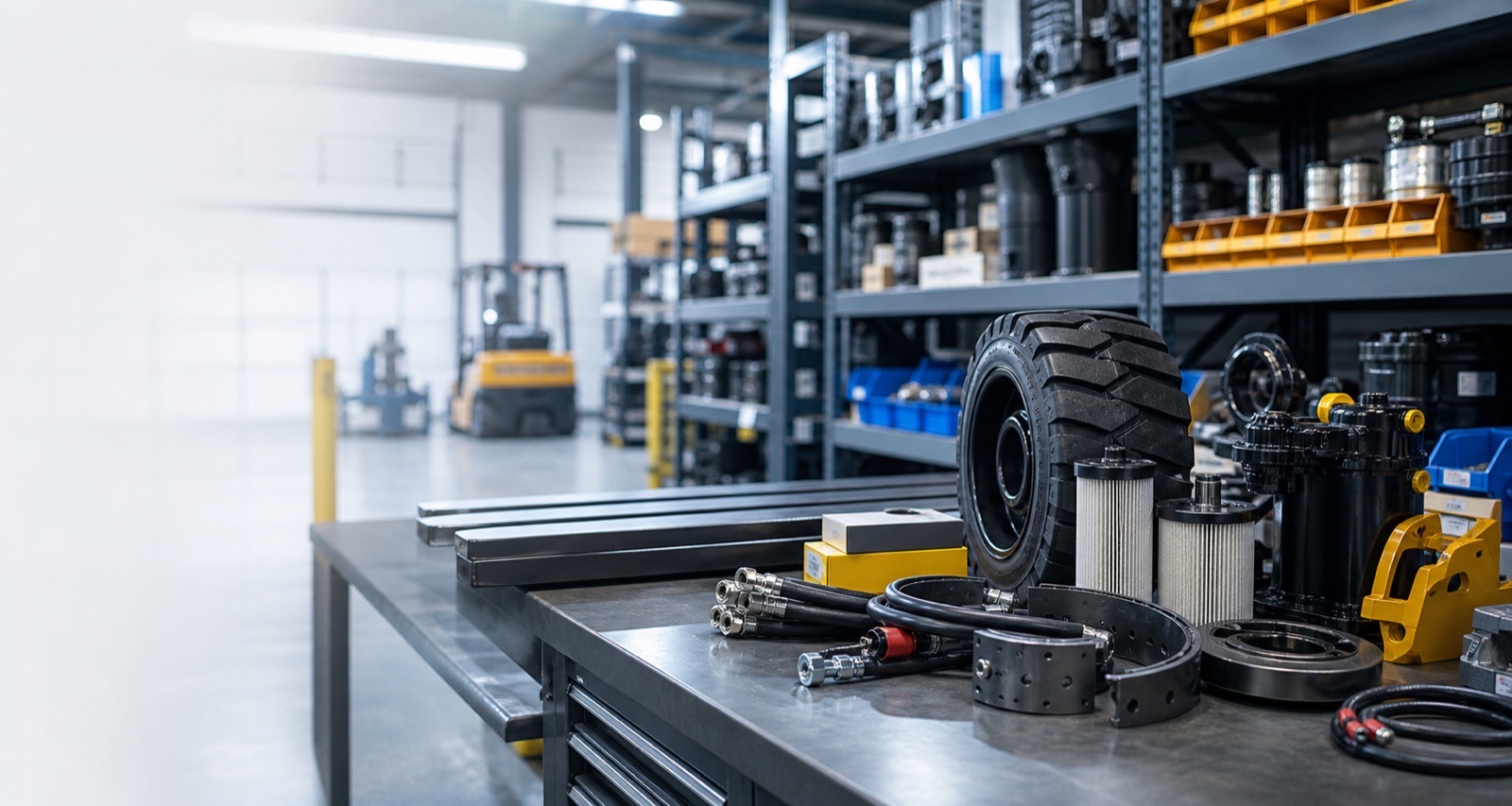
Understanding forklift filters matters because it can change availability, safety, cost or compliance in a real forklift operation. This guide explains the practical point a manager needs before the wrong part is ordered, delivery is delayed or a self-fit repair creates another fault because the component was not identified properly.
Short answer
Forklift filters protect engines, hydraulics and fuel systems by removing contamination before it damages pumps, injectors, valves or moving components. For forklift filters, the parts question covers identification, quality, availability and the correct fitting route. For forklift filters, judge this question against model-variant differences within the fleet, delivery timing aligned with engineer availability and evidence such as repeat failure around an unchanged routing problem; together they show whether the working plan should change.
What this means in practice
Filters matter most when the truck works in dust, packaging debris, cold starts, outdoor yards or high-hour shifts. A blocked air, oil, fuel or hydraulic filter can reduce power, increase heat, cause poor running or make a repair look more serious than it is. For forklift filters, the parts question covers identification, quality, availability and the correct fitting route. A stronger decision on forklift filters connects the technical point to the movement, record or cost it changes. Reviewing forklift filters, at the identification step before a purchase order is raised, ask the team to separate the truck symptom from the route, load and operator conditions and put a cost or delay against the event before ranking the response. Use forklift filters to reach a defensible choice about the truck, task, person, record or cost. Do not close the forklift filters review without considering stock items degrading before they are needed.
Leaving filters too long can turn a low-cost service item into injector problems, hydraulic wear, overheating or avoidable callouts. It also weakens the value of planned maintenance. The decision on forklift filters is whether the truck can continue, needs controlled monitoring or requires a repair, competence, inspection or equipment response.
Key checks
- When reviewing forklift filters, confirm which filter type is required: air, oil, fuel, hydraulic, transmission or cabin. Use proof that the fitted part resolved the original symptom to judge its importance.
- Before changing forklift filters arrangements, match filters by truck model, engine type and serial details rather than approximate size. Show whether it changes model-variant differences within the fleet.
- In the conditions affecting forklift filters at the identification step before a purchase order is raised, review the working environment and service interval together. Connect the finding to component markings and photographs in position.
- To answer “Forklift filters explained” with evidence, check for contamination signs around fuel, oil or hydraulic systems. Record its effect on return rights if identification evidence was incomplete.
- At the forklift filters final review, use filter changes as a prompt to review broader service condition. Use safety criticality of the failed component to judge its importance.
Common mistakes
For forklift filters, the avoidable error is closing the issue before the site has tested model-variant differences within the fleet. For forklift filters, a second failure is keeping evidence about safety-critical parts selected by price alone only in verbal handover rather than the management record.
What good looks like
For forklift filters, success is visible when the identification step before a purchase order is raised no longer relies on individual judgement: model-variant differences within the fleet has a control, old components discarded before comparison has a record and the next escalation point is understood.
When to ask WRMH for help
For forklift filters, if the question about forklift filters survives the site's own checks, ask WRMH to examine delivery timing aligned with engineer availability alongside substitute parts approved without compatibility proof. For forklift filters, that creates a clearer route to safer operation, faster diagnosis, stronger evidence or better cost control.